Balsamic Vinegar Reduction (Balsamic Glaze) Recipe
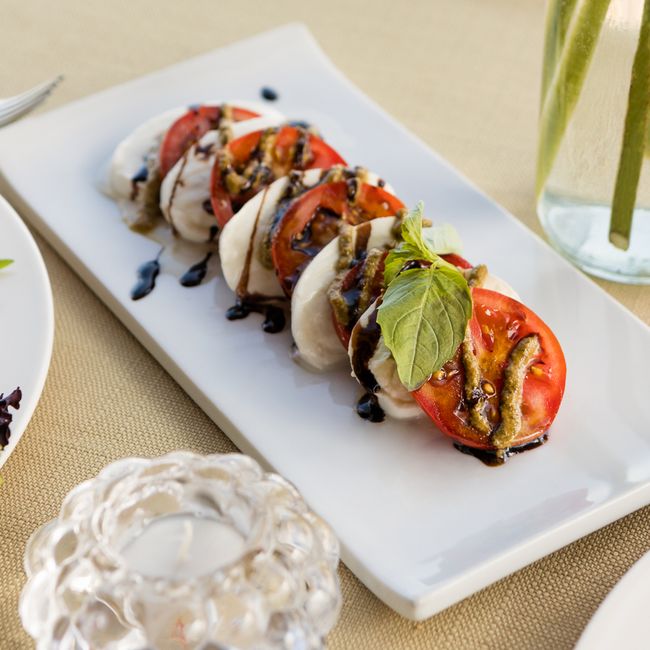
Balsamic vinegar is already low in water and high in sugar and acid, so simmering it down concentrates those sugars into a syrupy glaze without needing added starch or gelatin. That same acidity and sugar concentration is also why balsamic vinegar itself, and the glaze made from it, resist spoilage far longer than most pantry staples.
- Prep
- 2 min
- Cook
- 20 min
- Total
- 22 min
- Servings
- 12
Ingredients
- 2 cups balsamic vinegar
- 1 tablespoon honey (optional, for a rounder sweetness)
Nutrition per serving
- Calories
- 43
- Protein
- 0g
- Carbs
- 9g
- Fat
- 0g
Based on the recipe as written, one serving. Recalculates if you swap an ingredient above. An estimate only, exact values depend on the specific ingredients used.
Need different units or a different yield? Try our Conversion Calculator →
Instructions
- 1Pour the balsamic vinegar into a small, heavy-bottomed saucepan over medium heat.
- 2Bring it to a gentle simmer, then lower the heat to medium-low so it doesn't boil hard.
- 3Stir in the honey, if using, until dissolved.
- 4Simmer uncovered, stirring occasionally, for 15-20 minutes, until the liquid has reduced by roughly half and coats the back of a spoon in a thin, syrupy layer.
- 5Remove from heat immediately once it coats a spoon; it will continue to thicken as it cools, and overcooking turns it into hard candy.
- 6Let the glaze cool completely, then pour it into a small glass jar or squeeze bottle.
Tips & variations
- Use a mid-range balsamic vinegar for reducing rather than an expensive aged one; the long-aged, syrupy vinegars are better drizzled as-is since cooking flattens their nuance.
- Add a sprig of rosemary or a smashed garlic clove to the pan while it simmers, then strain it out, for a savory version to drizzle over roasted vegetables or steak.
- If the glaze hardens too much after cooling, warm the jar briefly in a bowl of hot water to loosen it back to a pourable consistency.
- Double the batch; the reduced glaze keeps far longer than fresh sauces, so it's worth making extra.
Storage & reheating
Store cooled balsamic glaze in a sealed jar at room temperature for up to a month, or in the refrigerator for up to 6 months; it will thicken further when chilled and loosens again at room temperature. As for the vinegar itself: unopened balsamic vinegar essentially doesn't go bad and can sit in a cool, dark pantry indefinitely. Once opened, it keeps its best flavor for about 3 to 5 years but remains safe to use well past that, since its high acidity keeps bacteria and mold from growing under normal storage. It does not need refrigeration; cold temperatures just make it thicker and harder to pour.
Tips from the Tulo kitchen
- Cloudiness or a thin layer of sediment at the bottom of an older bottle is just concentrated flavor compounds settling out, not spoilage.
- Keep the cap wiped clean and screwed on tightly between uses; dried, sugary drips around the rim are the most common source of a sticky, gunked-up bottle, not bacterial growth.
- If a bottle has been open for several years and tastes noticeably flat or dull, it's still safe, it's just lost some aromatic intensity.
FAQ
Does balsamic vinegar actually go bad?
Not in the way perishable foods do. Its high acidity (roughly pH 2.5 to 3.5) prevents bacteria and mold from growing, so a properly stored bottle stays safe to use indefinitely, even years past any printed date. It can gradually lose brightness and complexity over time, but that's a quality change, not a safety one.
How long does balsamic vinegar last after opening?
Most producers estimate 3 to 5 years for peak flavor once opened, but a tightly sealed bottle kept away from heat and direct light will typically still taste fine well beyond that window.
Should balsamic vinegar be refrigerated?
No. Refrigeration only thickens it and makes it harder to pour. A cool, dark cabinet away from the stove is the better storage spot.
What does spoiled balsamic vinegar actually look like?
True spoilage is rare and would show up as visible mold on the surface or a sharply off, unpleasant smell unlike its usual tangy-sweet aroma. Sediment, slight cloudiness, or a thickened texture are normal changes, not signs it's unsafe.
Can I still cook with older balsamic vinegar?
Yes. If there's no mold or off odor, it's safe to use, and reducing it into a glaze, as in this recipe, actually masks any flatness in flavor since the concentrated sugars come forward more than the vinegar's original brightness.