Classic Borscht
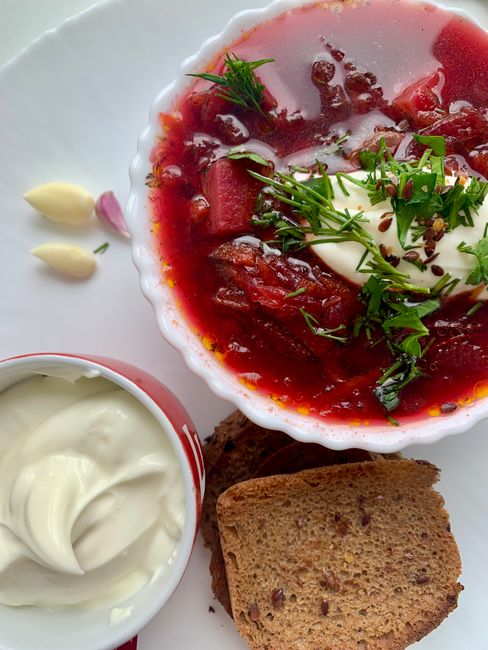
Grating the beets instead of dicing them speeds up cooking and lets their color bleed evenly into the broth, while a splash of vinegar added near the end keeps that color vivid and balances the natural sweetness of the beets and carrots. Cabbage goes in after the potato so both finish tender at the same time, and a final dollop of sour cream cuts the tang with richness.
- Prep
- 20 min
- Cook
- 1 hr
- Total
- 1 hr 20 min
- Servings
- 6
Ingredients
- 1 1/2 lb beets, peeled and grated
- 8 cups beef or vegetable stock
- 4 cups cabbage, shredded
- 2 cups potato, diced
- 1 cup carrot, grated
- 1 cup onion, diced
- 2 tbsp tomato paste
- 3 cloves garlic, minced
- 2 tbsp red wine vinegar
- 1 tsp sugar
- 2 leaves bay leaves
- 2 tbsp vegetable oil
- 1 tsp salt
- 1/2 cup sour cream, for serving
- 2 tbsp fresh dill, chopped
Nutrition per serving
- Calories
- 247
- Protein
- 6g
- Carbs
- 39g
- Fat
- 9g
Based on the recipe as written, one serving. Recalculates if you swap an ingredient above. An estimate only, exact values depend on the specific ingredients used.
Need different units or a different yield? Try our Conversion Calculator →
Instructions
- 1Heat the vegetable oil in a large pot or Dutch oven over medium heat. Add the onion and carrot and cook, stirring occasionally, for 5-7 minutes until softened.
- 2Add the grated beets and garlic, and cook for 5 minutes more, stirring often, until the oil turns deep red and the beets begin to soften.
- 3Stir in the tomato paste and cook for 1-2 minutes, stirring constantly, until it darkens slightly and smells toasted.
- 4Pour in the stock, add the bay leaves, and bring the pot to a boil.
- 5Add the diced potato, reduce the heat to a simmer, and cook uncovered for 15-20 minutes, until the potato is nearly tender.
- 6Stir in the shredded cabbage and simmer for another 12-15 minutes, until both the cabbage and potato are fully tender.
- 7Stir in the red wine vinegar and sugar, then season with salt and pepper to taste. Simmer 5 more minutes to let the flavors come together.
- 8Remove the bay leaves. Ladle the borscht into bowls and top each with a dollop of sour cream and a scattering of fresh dill.
Tips & variations
- Grate the beets on the large holes of a box grater rather than dicing them; smaller pieces cook faster and release more color into the broth.
- Add shredded cooked beef, pork, or kielbasa along with the stock for a heartier main-course version.
- A pinch of caraway seeds added with the tomato paste gives the soup a more traditional Eastern European flavor.
- For an even deeper color, roast one or two of the beets whole at 400°F (200°C) until fork-tender, then grate them in along with the raw ones.
Storage & reheating
Store cooled borscht in an airtight container in the refrigerator for up to 5 days; the flavor actually improves after a day as the vinegar and beets mellow together. Reheat gently on the stovetop over low heat, stirring occasionally, and avoid a hard boil, which can dull the color. Freeze without the sour cream for up to 3 months; thaw overnight in the fridge before reheating.
Tips from the Tulo kitchen
- Let the finished pot sit off the heat for 10 minutes before serving; the color deepens noticeably as it rests.
- A squeeze of lemon juice stirred into individual bowls brightens the soup further for anyone who likes it tangier.
FAQ
Why did my borscht turn brownish instead of staying bright red?
Extended boiling after the beets go in breaks down their red pigments (betalains). Simmer gently once the beets are added and stir in the vinegar near the end, since the acid helps stabilize the color.
Can I use vegetable stock instead of beef stock?
Yes, vegetable stock makes a fully vegetarian version that still tastes rich thanks to the tomato paste and sautéed vegetables; beef stock just adds an extra layer of savory depth.
Is borscht supposed to be served hot or cold?
This version is served hot, which is the more common style in Poland and Ukraine during colder months; a chilled variation made with buttermilk is more typical in summer.
Can I use canned or pre-cooked beets?
Yes, though fresh raw beets grated into the soup give a more vibrant color and firmer texture; if using canned, add them later in the simmer since they're already soft.