Low-Carb Zucchini Noodle Pasta with Garlic Butter Shrimp
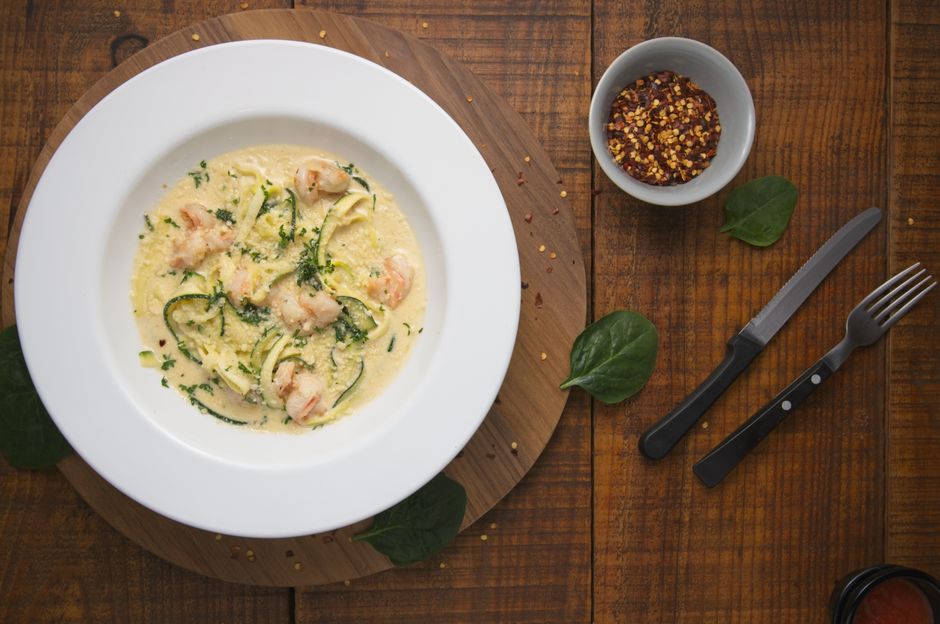
Spiralized zucchini stands in for wheat pasta without the starchy carb load, and blotting the noodles dry before cooking keeps them from watering down the garlic butter sauce, so the dish still tastes rich and saucy instead of thin and diluted.
- Prep
- 15 min
- Cook
- 15 min
- Total
- 30 min
- Servings
- 4
Ingredients
- 4 medium zucchini, spiralized into noodles
- 1 lb large shrimp, peeled and deveined
- 3 tbsp unsalted butter
- 4 cloves garlic, minced
- 2 tbsp olive oil
- 1 cup cherry tomatoes, halved
- 1/2 cup grated parmesan cheese
- 1/4 tsp red pepper flakes
- 1 tbsp lemon juice
- 2 tbsp fresh basil, chopped
Nutrition per serving
- Calories
- 565
- Protein
- 31g
- Carbs
- 10g
- Fat
- 45g
Based on the recipe as written, one serving. Recalculates if you swap an ingredient above. An estimate only, exact values depend on the specific ingredients used.
Need different units or a different yield? Try our Conversion Calculator →
Instructions
- 1Spiralize the zucchini into noodles, then spread them on a few layers of paper towels, sprinkle lightly with salt, and let sit for 10 minutes to draw out excess moisture; blot dry before cooking.
- 2Pat the shrimp dry and season with salt and pepper.
- 3Heat the olive oil in a large skillet over medium-high heat. Add the shrimp in a single layer and cook for about 90 seconds per side, until pink and opaque. Transfer to a plate.
- 4In the same skillet, melt the butter over medium heat. Add the garlic and red pepper flakes and cook for 30 seconds, until fragrant but not browned.
- 5Add the cherry tomatoes and cook for 2 to 3 minutes, until they just start to soften and release some juice.
- 6Add the zucchini noodles to the skillet and toss with tongs for 2 to 3 minutes, just until they turn bright green and slightly tender; do not let them go limp.
- 7Return the shrimp to the skillet along with the lemon juice and parmesan. Toss everything together for about 30 seconds to coat.
- 8Remove from heat, scatter the basil over the top, and serve immediately.
Tips & variations
- Swap the zucchini for spiralized yellow squash, or use a mix of both for color contrast in the bowl.
- Shirataki noodles (made from konjac root) are an even lower-carb option than zucchini and hold up better if the dish needs to sit for a few minutes before serving; rinse them well and dry-fry for a minute before saucing to remove their natural odor.
- For a heartier, oven-based alternative, roasted spaghetti squash strands work in place of zoodles, though they take on more sauce and turn out slightly sweeter.
- Add a splash of heavy cream with the parmesan for a richer, alfredo-style sauce instead of the light garlic butter version.
Storage & reheating
Zucchini noodles are best eaten right away since they continue releasing water as they sit, even in the fridge. If storing leftovers, keep the noodles and shrimp mixture in an airtight container for up to 2 days and reheat gently in a skillet over medium-low heat just until warmed through, draining off any extra liquid before serving.
Tips from the Tulo kitchen
- A julienne peeler works almost as well as a spiralizer if you're testing out zoodles for the first time and don't want to buy new equipment.
- Cook the zucchini noodles in the same skillet used for the shrimp and sauce rather than boiling them separately; boiling adds even more water to noodles that are already mostly water.
FAQ
What are the best low carb pasta alternatives besides zucchini noodles?
Spaghetti squash, shirataki (konjac) noodles, hearts of palm pasta, and spiralized yellow squash or carrots are the most common substitutes; shirataki has the lowest carb count of the group, while spaghetti squash has the most pasta-like bite.
Why do zucchini noodles get watery?
Zucchini is roughly 95% water by weight, and heat causes its cell walls to break down and release that liquid. Salting the noodles and blotting them dry for 10 minutes before cooking removes much of that moisture upfront.
Can I meal prep zucchini noodles ahead of time?
Raw spiralized zucchini can be stored dry in a paper-towel-lined container in the fridge for up to 2 days, but they shouldn't be cooked and stored ahead, since they'll continue to release water and turn mushy on reheating.
Do I need a spiralizer to make zucchini noodles?
No. A julienne peeler or even a regular vegetable peeler cutting long ribbons will work; a spiralizer just produces a rounder, more spaghetti-like strand.